Project Brief
Overview
Research
Prototyping
Final Product
Results & Reflection

Pawdle

A social app that connects dog owners and their dogs through tailored events and communities.

Product Design

UX/UI

Mobile Design

Project Brief

Pawdle was created in response to a class brief to design a social app for a specific audience. I focused on dog owners, particularly those with reactive dogs, limited social networks, or busy urban lifestyles, who struggle to find safe, relevant opportunities for pet socialization, exercise, and advice. Through interviews, app reviews, and iterative prototyping, I designed my first ever mobile app, centering around compatibility, trust, and low-pressure social connection for both dogs and their people.

Project Type

Academic (Santa Monica College)

Role

Solo Product Designer

Timeline

Summer 2024 (8 weeks)

Project Brief

Pawdle was created in response to a class brief to design a social app for a specific audience. I focused on dog owners, particularly those with reactive dogs, limited social networks, or busy urban lifestyles, who struggle to find safe, relevant opportunities for pet socialization, exercise, and advice. Through interviews, app reviews, and iterative prototyping, I designed my first ever mobile app, centering around compatibility, trust, and low-pressure social connection for both dogs and their people.

Project Type

Academic (Santa Monica College)

Role

Solo Product Designer

Timeline

Summer 2024 (8 weeks)

Project Brief

Pawdle was created in response to a class brief to design a social app for a specific audience. I focused on dog owners, particularly those with reactive dogs, limited social networks, or busy urban lifestyles, who struggle to find safe, relevant opportunities for pet socialization, exercise, and advice. Through interviews, app reviews, and iterative prototyping, I designed my first ever mobile app, centering around compatibility, trust, and low-pressure social connection for both dogs and their people.

Project Type

Academic (Santa Monica College)

Role

Solo Product Designer

Timeline

Summer 2024 (8 weeks)

Problem

Urban dog owners, especially those with busy schedules or dogs with specific needs, struggle to find safe, compatible events, advice, and communities through existing social and event platforms.

Insights

Dog owners have highly specific needs shaped by their dog’s behavior; many want to connect with other pet parents but worry about compatibility and safety, while social communities strongly motivate regular exercise and a sense of belonging.

Solution

Pawdle is a social and event app that helps dog owners discover and access compatible meetups, trusted local communities, and tailored advice through detailed tags, filters, and profile systems designed specifically around dogs and their owners.

Outcome

The final hi-fi prototype received strong positive feedback from interviewees across age groups and was selected by my professor as an example for future classes. Users described the app as thoughtful, approachable, and something they would realistically use in daily life.

Problem

Urban dog owners, especially those with busy schedules or dogs with specific needs, struggle to find safe, compatible events, advice, and communities through existing social and event platforms.

Insights

Dog owners have highly specific needs shaped by their dog’s behavior; many want to connect with other pet parents but worry about compatibility and safety, while social communities strongly motivate regular exercise and a sense of belonging.

Solution

Pawdle is a social and event app that helps dog owners discover and access compatible meetups, trusted local communities, and tailored advice through detailed tags, filters, and profile systems designed specifically around dogs and their owners.

Outcome

The final hi-fi prototype received strong positive feedback from interviewees across age groups and was selected by my professor as an example for future classes. Users described the app as thoughtful, approachable, and something they would realistically use in daily life.

Problem

Urban dog owners, especially those with busy schedules or dogs with specific needs, struggle to find safe, compatible events, advice, and communities through existing social and event platforms.

Insights

Dog owners have highly specific needs shaped by their dog’s behavior; many want to connect with other pet parents but worry about compatibility and safety, while social communities strongly motivate regular exercise and a sense of belonging.

Solution

Pawdle is a social and event app that helps dog owners discover and access compatible meetups, trusted local communities, and tailored advice through detailed tags, filters, and profile systems designed specifically around dogs and their owners.

Outcome

The final hi-fi prototype received strong positive feedback from interviewees across age groups and was selected by my professor as an example for future classes. Users described the app as thoughtful, approachable, and something they would realistically use in daily life.

Research

App Reviews

Existing social and event platforms are designed for scale, not for assessing compatibility, intent, or safety within real-world communities.

To ground the project, I reviewed major social platforms (Instagram, Reddit, Pinterest, YouTube) to understand common patterns in discovery, navigation, feeds, and interaction, as well as event apps like Meetup and Eventbrite. While effective for broad discovery, these tools don’t support offline community building for niche groups or provide dog and owner-specific context, making it hard to assess compatibility, intent, or safety. These insights helped me understand familiar flows before tailoring the experience to dog owners.
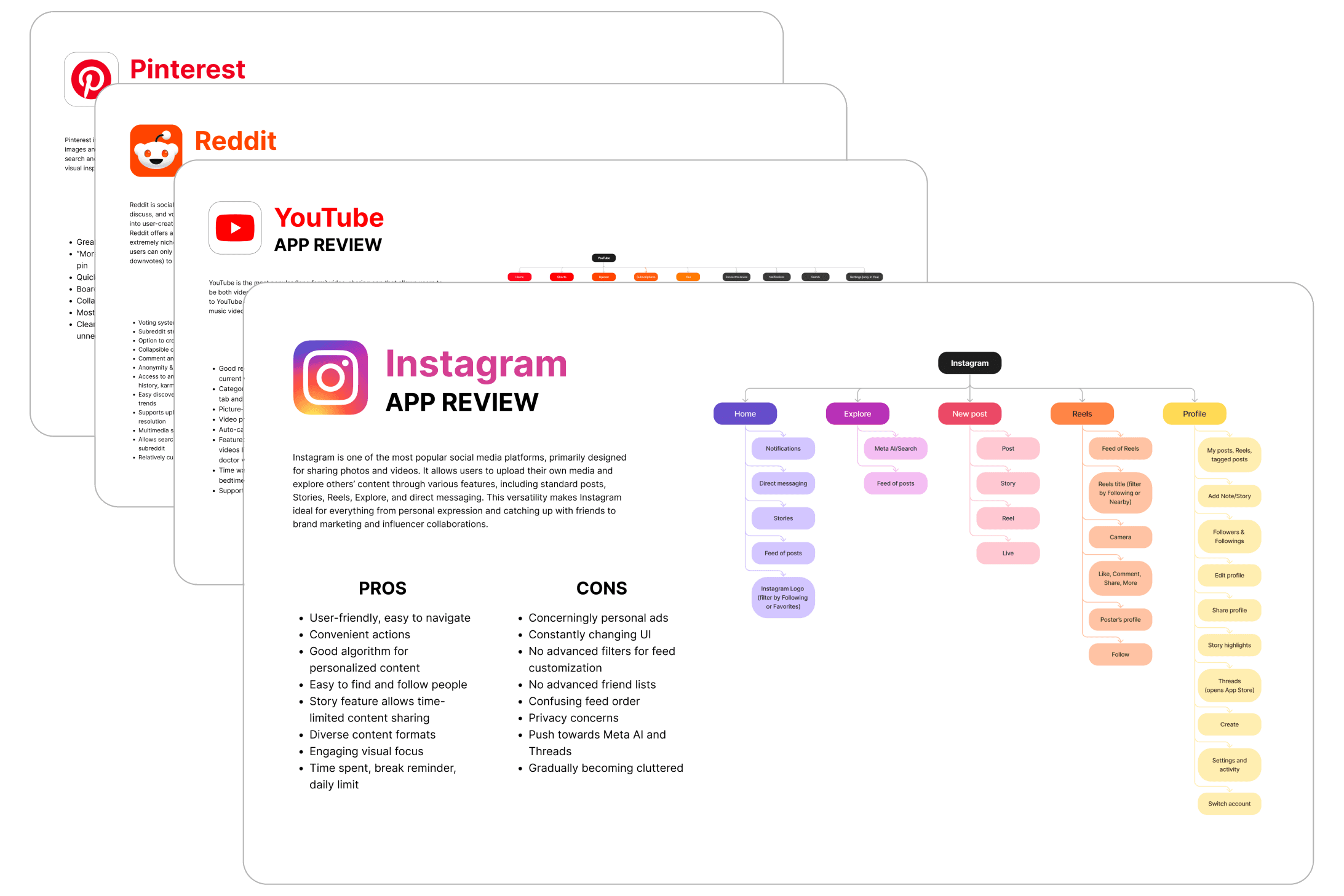
A study of social media platform features, sitemaps, and UX strengths and weaknesses.

Interviews

Dog owners want more convenient and compatible ways to connect, learn, and stay active.

I interviewed dog owners across ages and life stages to understand their routines, interests, concerns, and unmet needs. Participants struggled to find compatible playmates, dog-friendly spaces, and trustworthy advice or resources, particularly when managing busy schedules or behavioral challenges. Although use cases varied, all liked the app concept while emphasizing the importance of safety, trust, and compatibility for in-person interactions. This directly informed the app’s focus on tags, filters, and transparent profiles.
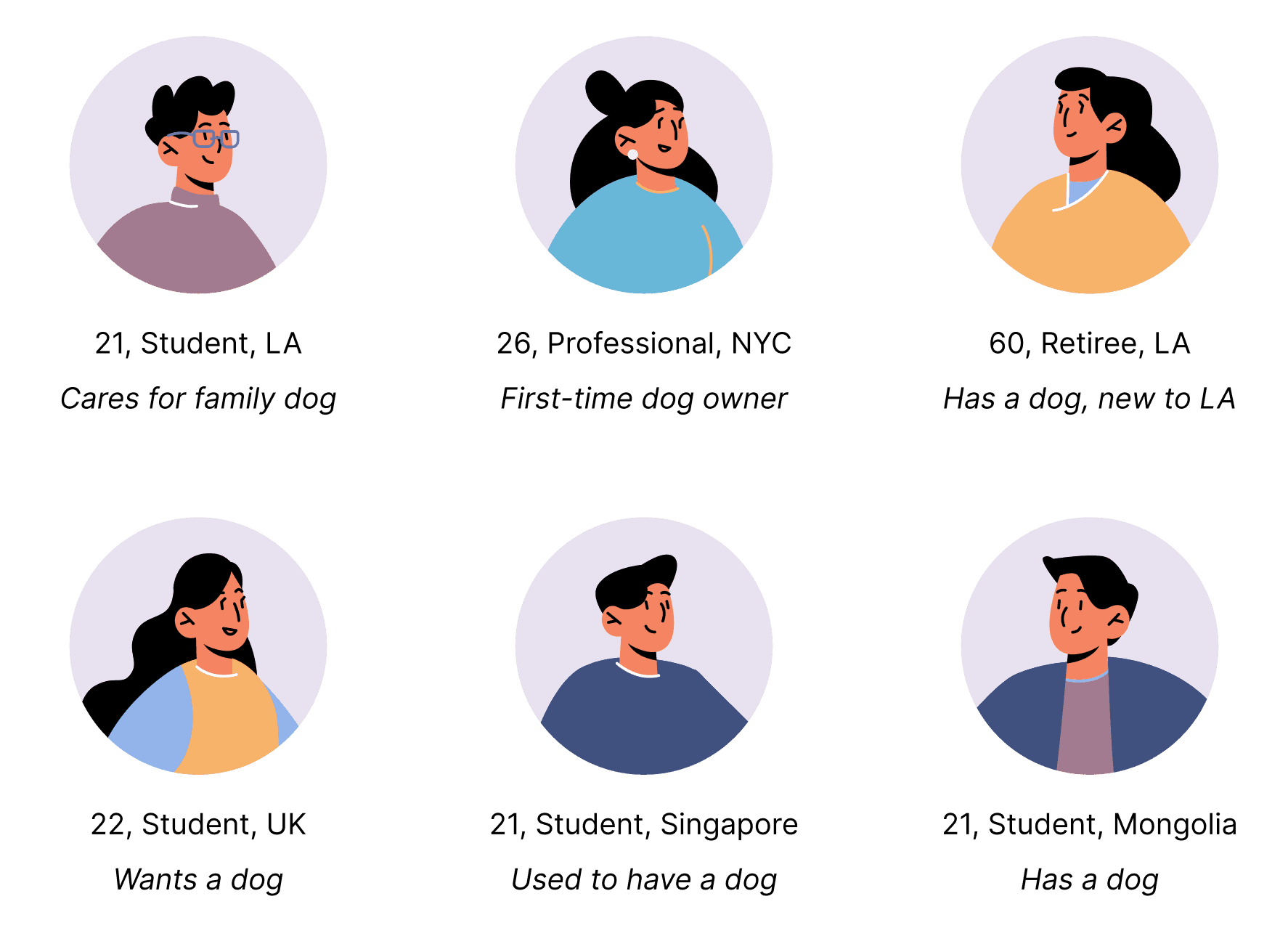
Interviewees represented a diverse range of ages, locations, and pet care experience. (Profile icons by upklyak on Freepik.)

Personas & Scenarios

Different lifestyles create different goals, but dogs act as a powerful social bridge and motivator.

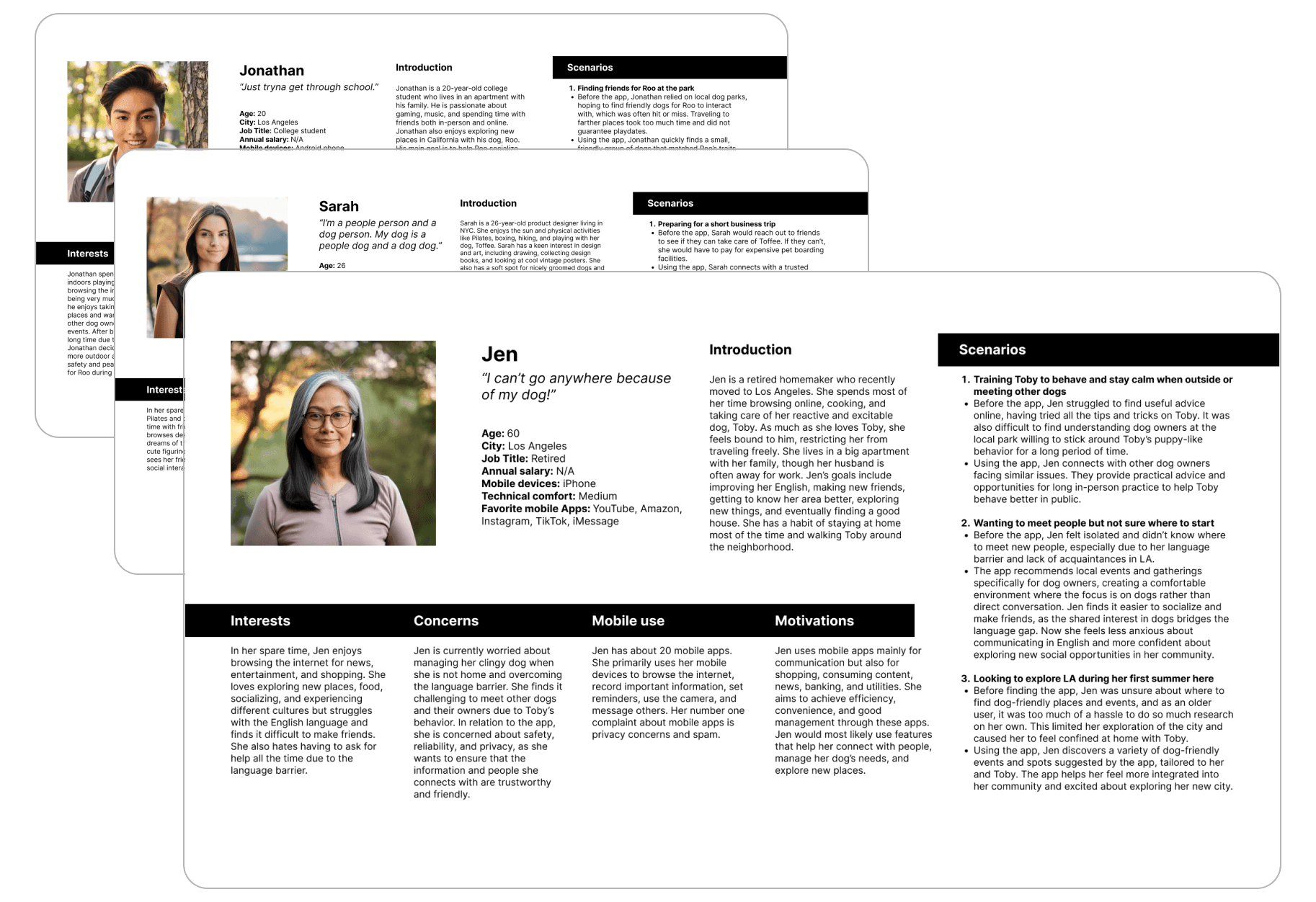
I synthesized interview insights into three personas—a student, a working professional, and a retiree—to reflect different lifestyles, goals, constraints, and experience levels.


Jonathan is a busy college student balancing school, social life, and a timid dog who needs safe, positive socialization. He uses Pawdle to find compatible playmates, dog-friendly study spots, and trusted advice without wasting time, energy, or money.

Jonathan: College Student

Jonathan is a busy college student balancing school, social life, and a timid dog who needs safe, positive socialization. He uses Pawdle to find compatible playmates, dog-friendly study spots, and trusted advice without wasting time, energy, or money.

Jonathan: College Student

Jonathan is a busy college student balancing school, social life, and a timid dog who needs safe, positive socialization. He uses Pawdle to find compatible playmates, dog-friendly study spots, and trusted advice without wasting time, energy, or money.

Jonathan: College Student

Sarah is a highly social, young professional who integrates her dog into an active, event-filled lifestyle. She uses Pawdle for exercise groups, dog care coordination, grooming advice, and travel planning.

Sarah: Young Professional

Sarah is a highly social, young professional who integrates her dog into an active, event-filled lifestyle. She uses Pawdle for exercise groups, dog care coordination, grooming advice, and travel planning.

Sarah: Young Professional

Sarah is a highly social, young professional who integrates her dog into an active, event-filled lifestyle. She uses Pawdle for exercise groups, dog care coordination, grooming advice, and travel planning.

Sarah: Young Professional

Jen is a recent retiree new to LA with a reactive dog and limited social confidence due to language barriers. She uses Pawdle as a low-pressure way to find understanding owners, practice training, and build community while exploring the city.

Jen: Retiree New to the City

Jen is a recent retiree new to LA with a reactive dog and limited social confidence due to language barriers. She uses Pawdle as a low-pressure way to find understanding owners, practice training, and build community while exploring the city.

Jen: Retiree New to the City

Jen is a recent retiree new to LA with a reactive dog and limited social confidence due to language barriers. She uses Pawdle as a low-pressure way to find understanding owners, practice training, and build community while exploring the city.

Jen: Retiree New to the City

Full persona sheets detailing personality, life stage, interests, concerns, habits, motivations, and potential Pawdle use scenarios.

Storyboard

Shared understanding turns stressful outings into confident progress for both dogs and owners.

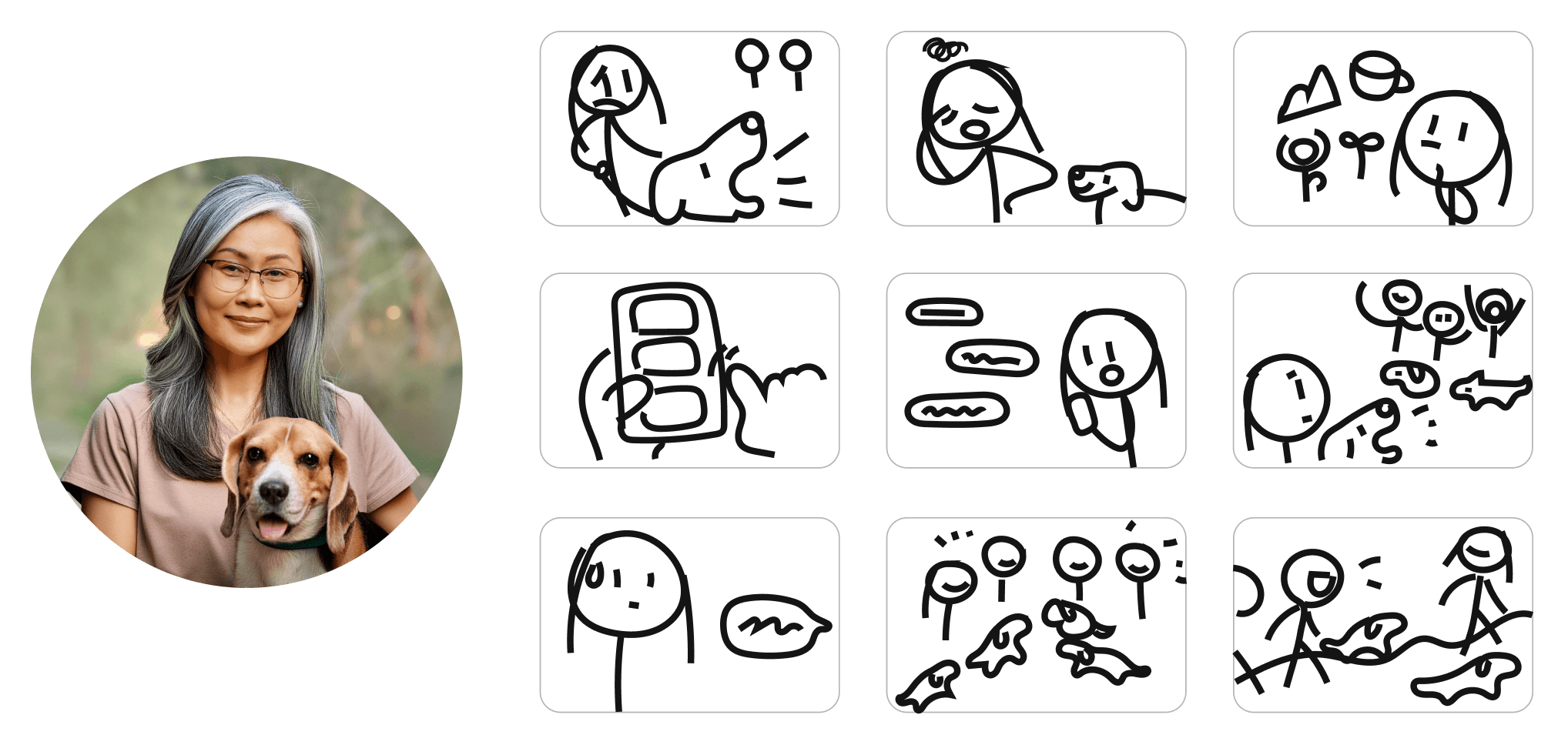
Jen, a retiree new to LA, takes her reactive dog Toby to the park, where his barking and lunging draw attention and leave her embarrassed and discouraged. Generic online advice hasn’t helped, and as an older user and newcomer still learning English, finding local activities feels overwhelming. After discovering Pawdle, she joins a small, beginner-friendly meetup for reactive dogs. Surrounded by owners who understand and are focused on training and patience, both Jen and Toby begin to relax. Over time, the dogs improve, friendships form, and Jen finally feels at home in her new city.
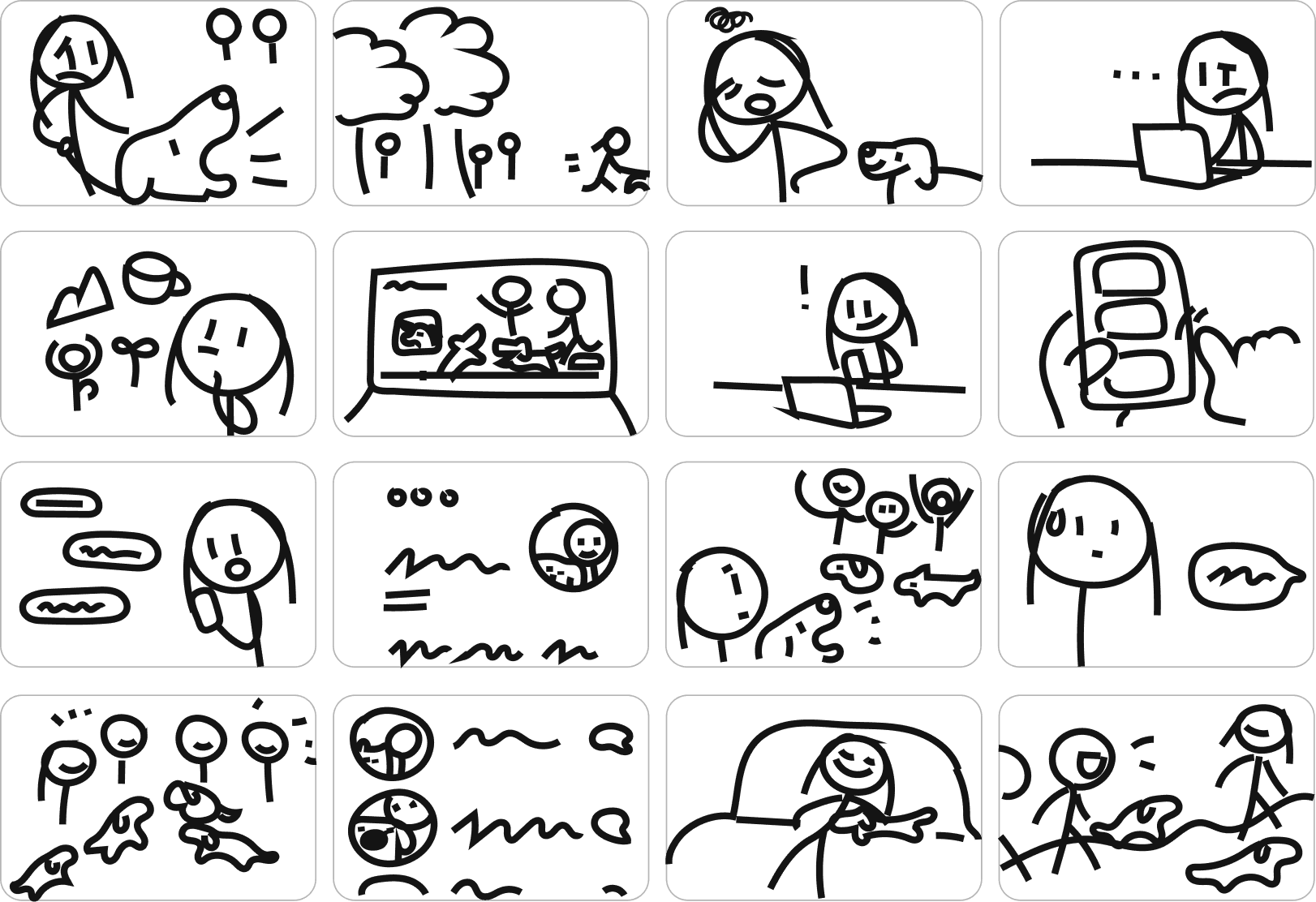
The storyboard follows Jen and her dog Toby through their journey from isolation and uncertainty to community and confidence.

Prototyping

Design Patterns

I referenced mobile design patterns for onboarding, search and filtering, card layouts, event listings, and profile systems, drawing inspiration from social and event platforms like Meetup. This clarified how to organize dense information, structure tabs, prioritize key actions, and surface trust signals such as tags and verification, keeping the app realistic and usable within time and technical constraints.
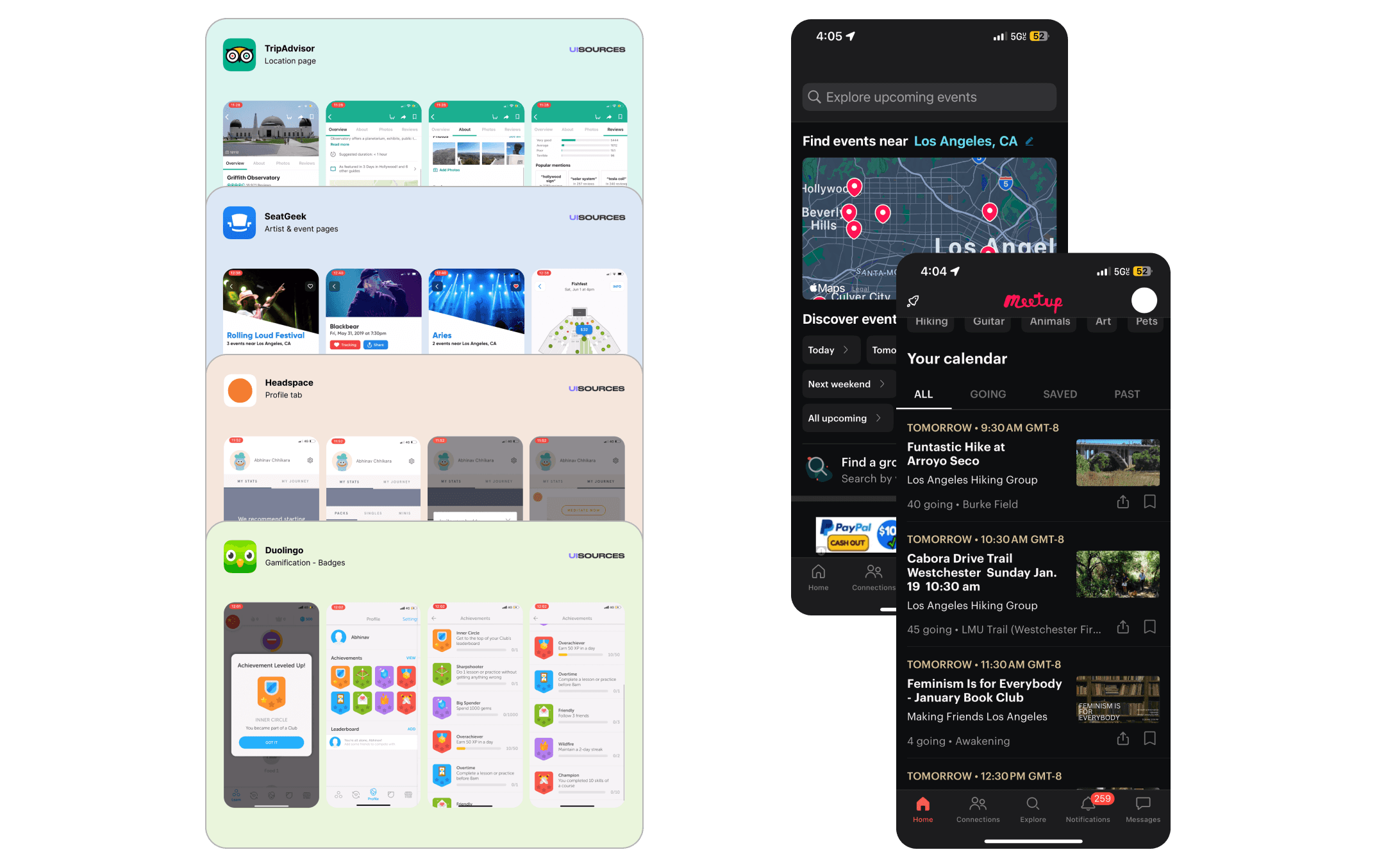
Design pattern references from UISources and screenshots of the Meetup app.

Sketches

Based on design pattern references and a list of features, I sketched key screens using card-based layouts to explore hierarchy, spacing, and content organization. Visualizing the app made it easier to identify gaps and gather early feedback before moving into Figma.
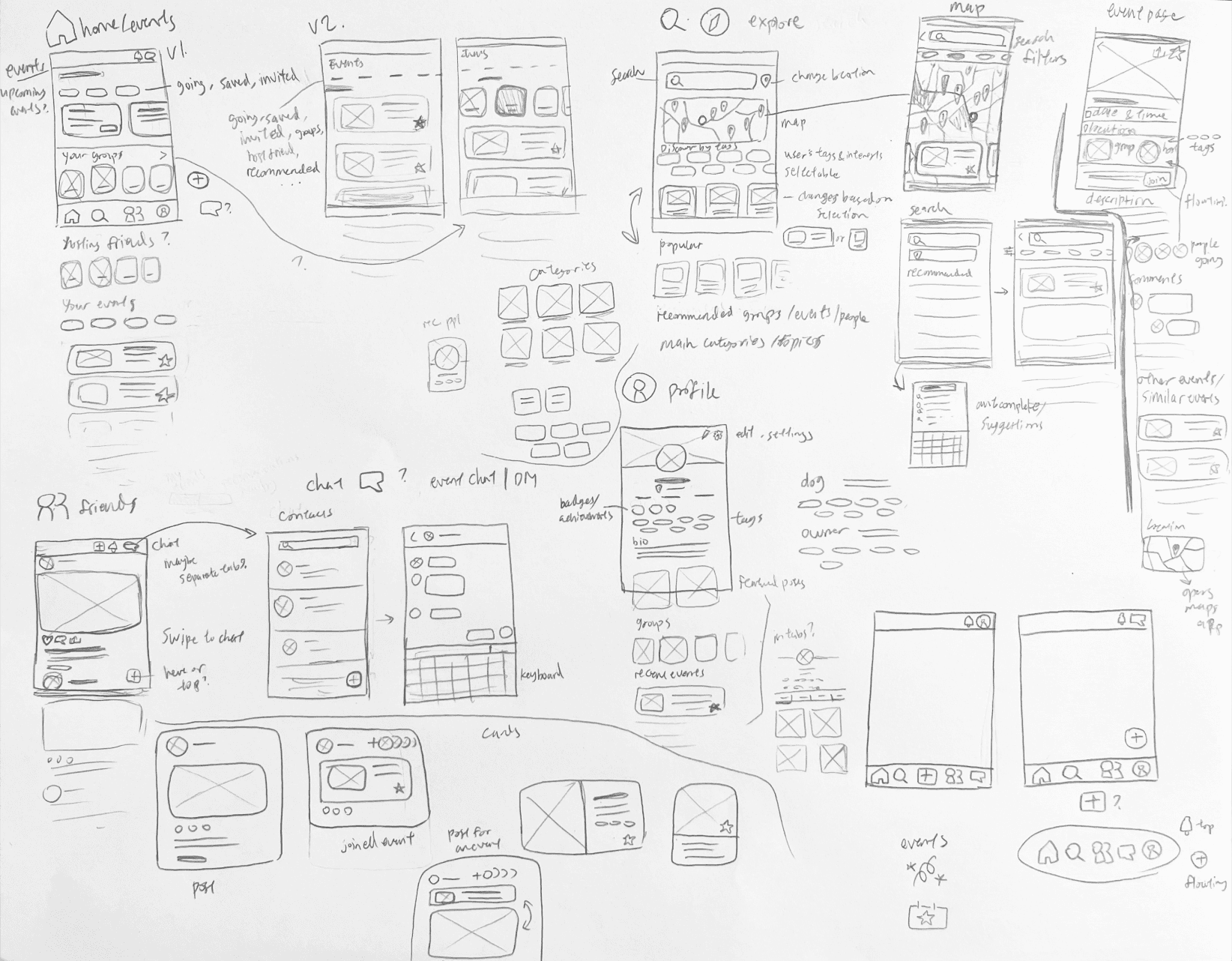
“Brain dump” sketches exploring potential screens, flows, and feature ideas.

Sitemap

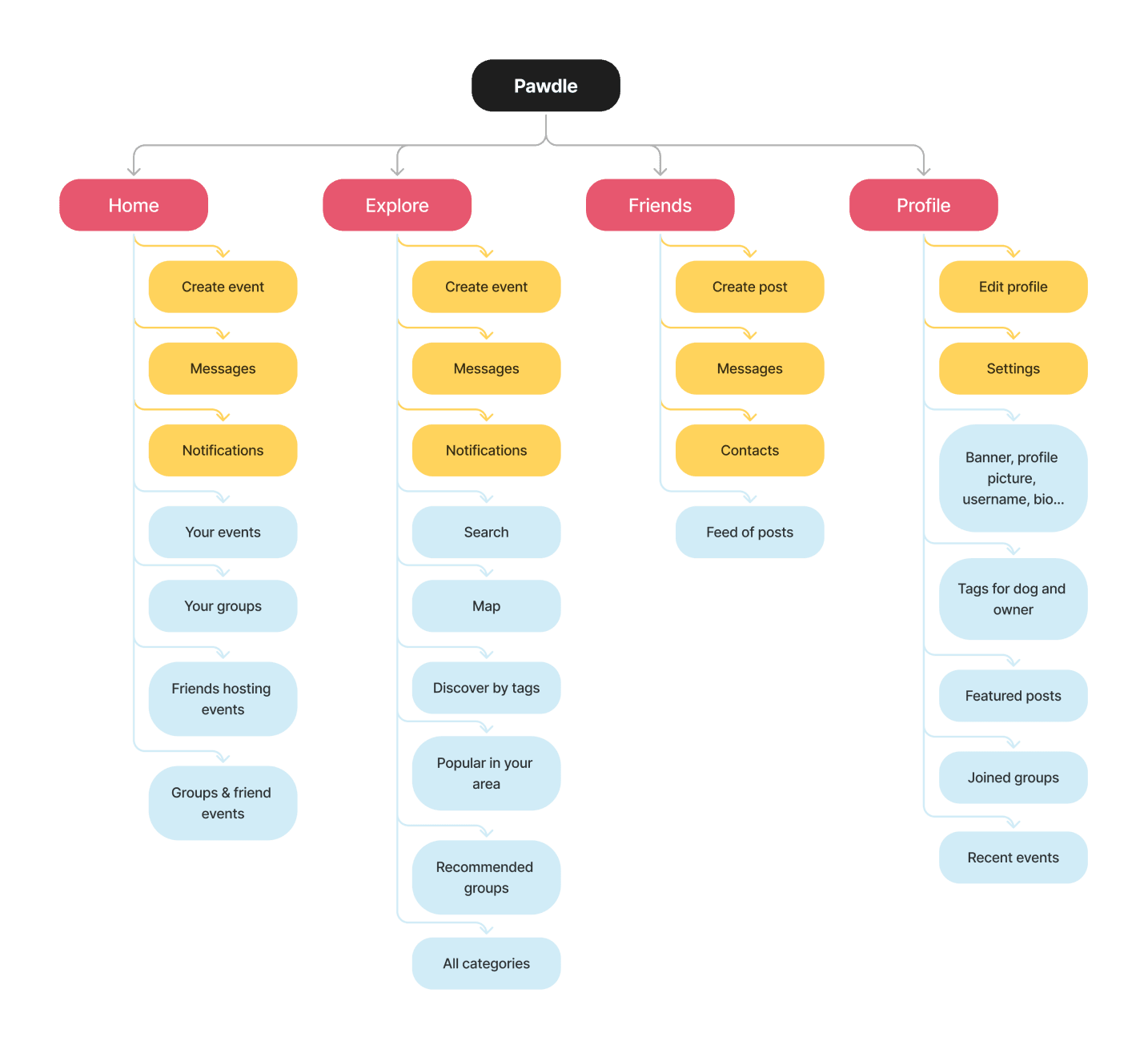
I explored multiple versions of the sitemap, refining the structure through wireframing, reference apps, and feedback from interviewees. While I initially aimed to settle on most of the structure early, building the wireframes surfaced issues more clearly and led to better decisions. This process resulted in four main tabs (home, search, friends, profile), with messages moved to the top bar as a secondary feature.
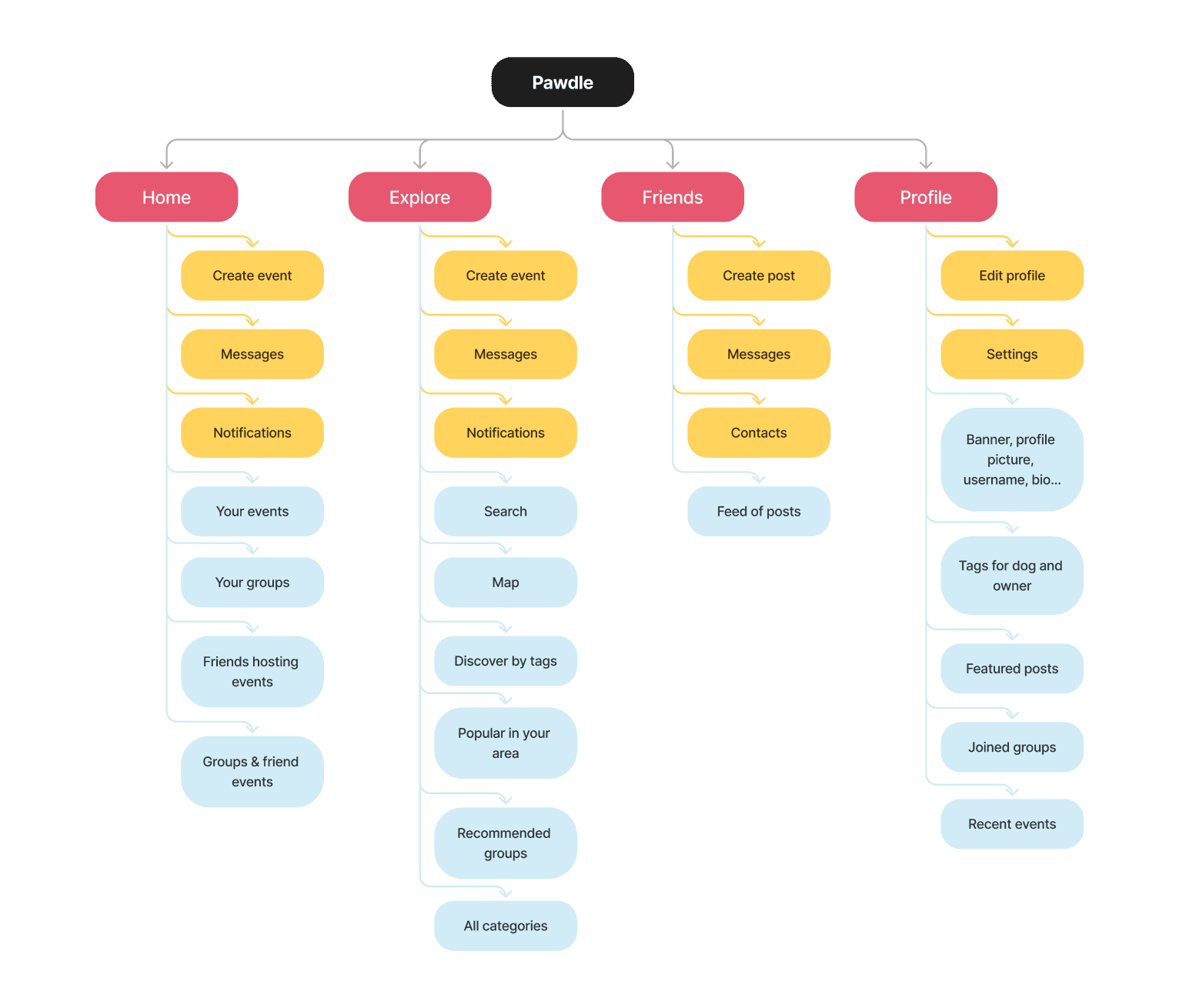
Pink: Main tabs | Yellow: Secondary navigation | Blue: Tab sections

Lo-Fi to Hi-Fi Prototype

I created the wireframes from scratch in Figma, defining the main navigation tabs and core section layouts. The prototype is centered on Jen’s persona, including personalized tags, groups, events, profiles, and recommendations based on her pet training and community building needs. Mirroring the prototype on my phone and referencing established design patterns helped refine hierarchy, spacing, and realism.
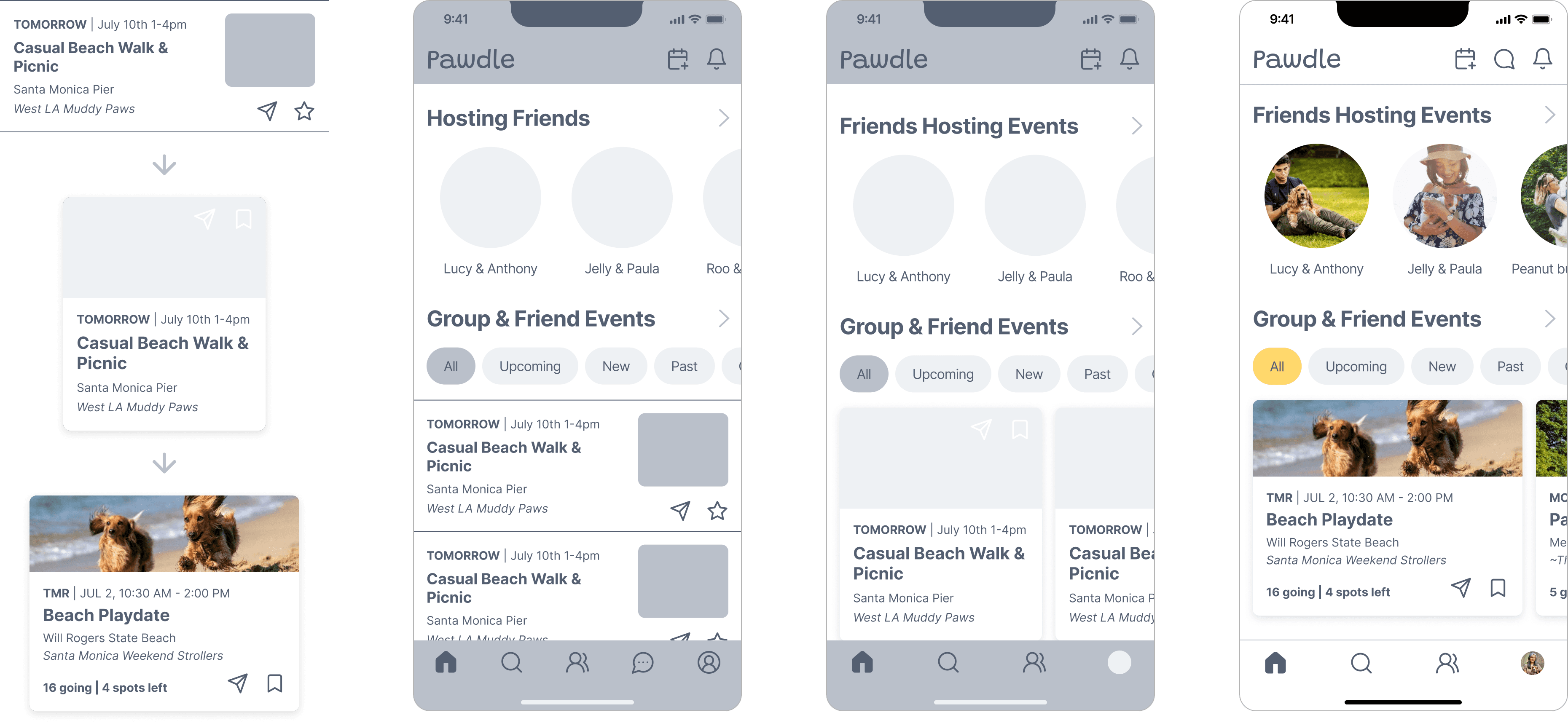
Home tab iterations showing the evolution of event card designs and layout.
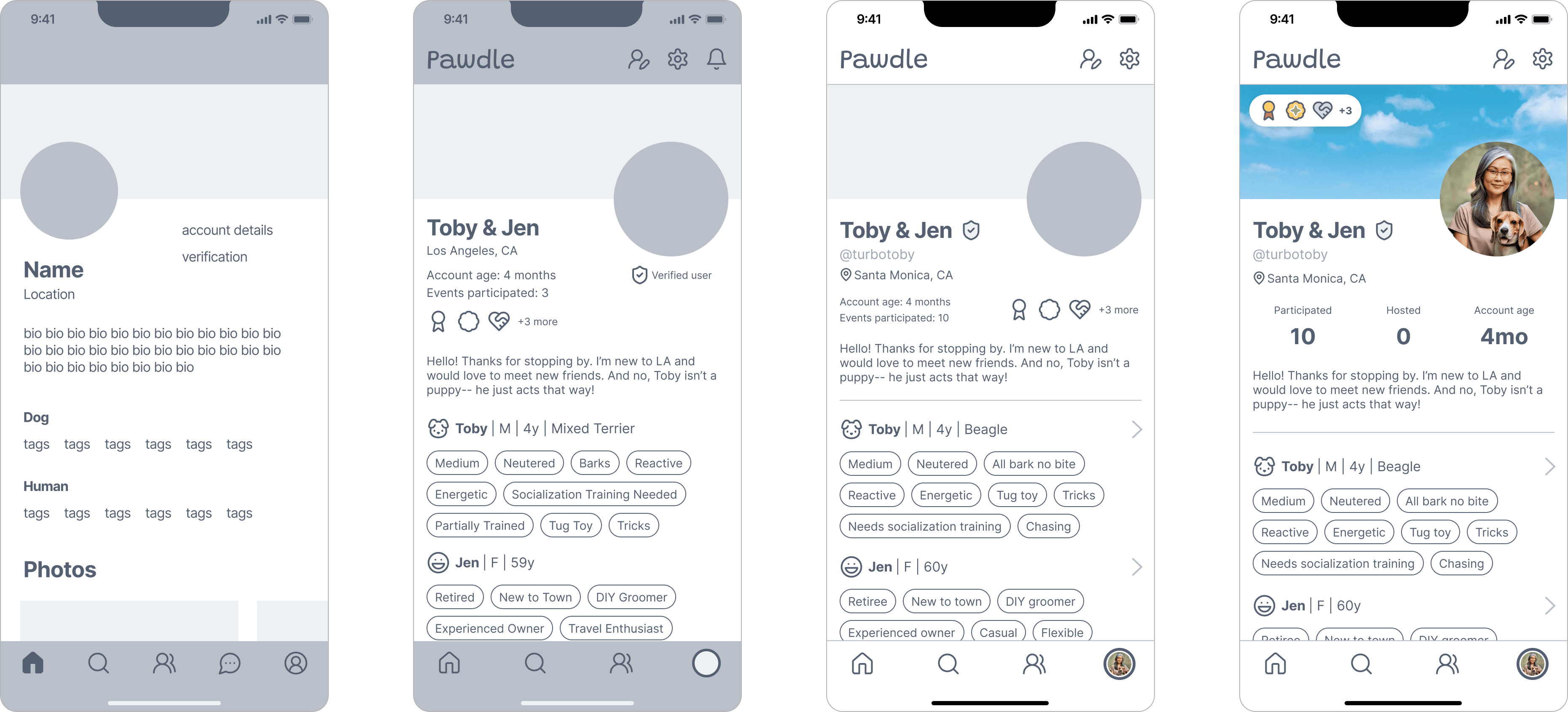
Process of the profile tab from rough text layout to hi-fi.

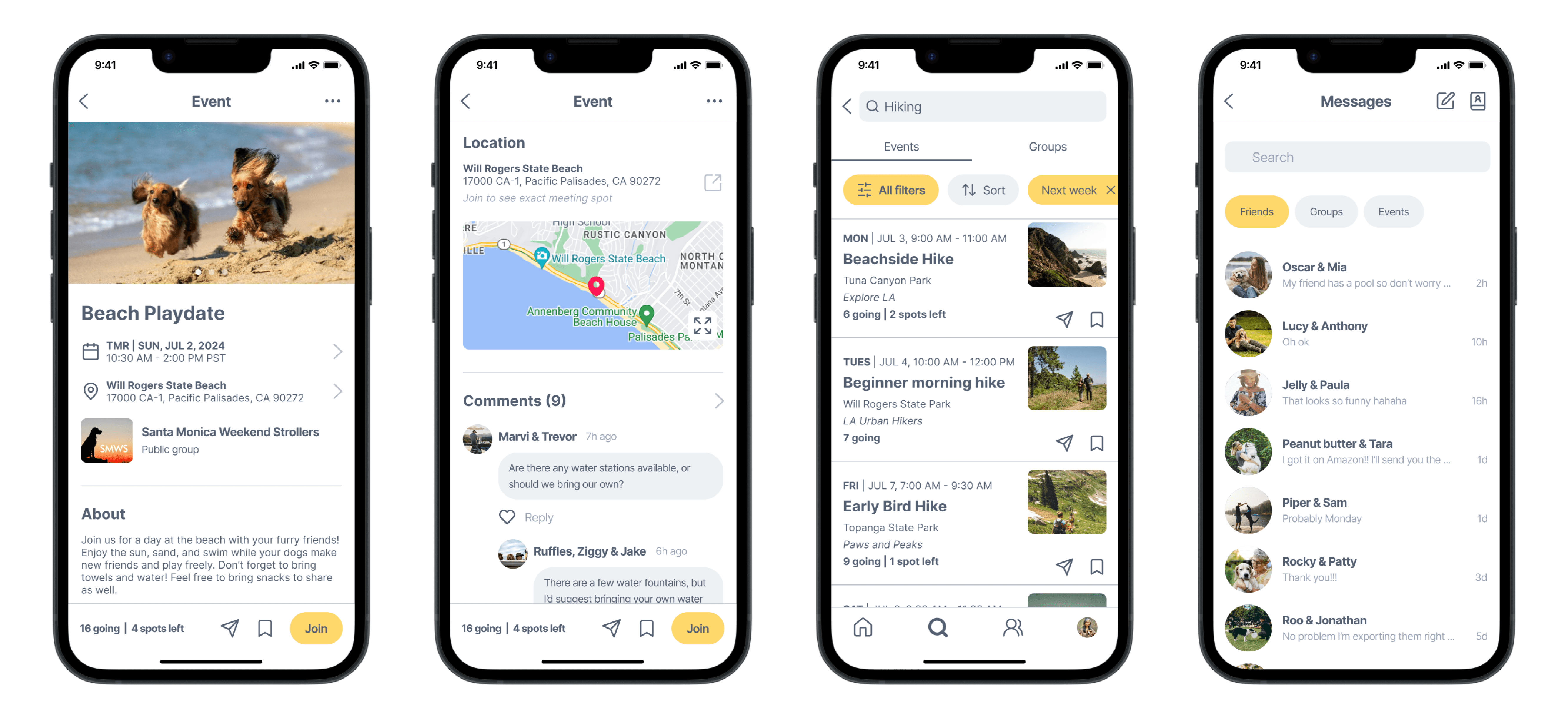
As I moved into high-fidelity design, I expanded the prototype to include additional screens such as the splash screen, event detail pages, a full search and filter flow. Informal user testing showed that most interactions felt intuitive and features were useful but there were still opportunities to improve copy clarity and expand tagging. I focused iterations on rewriting headers and tags and refining information hierarchy by reordering sections.
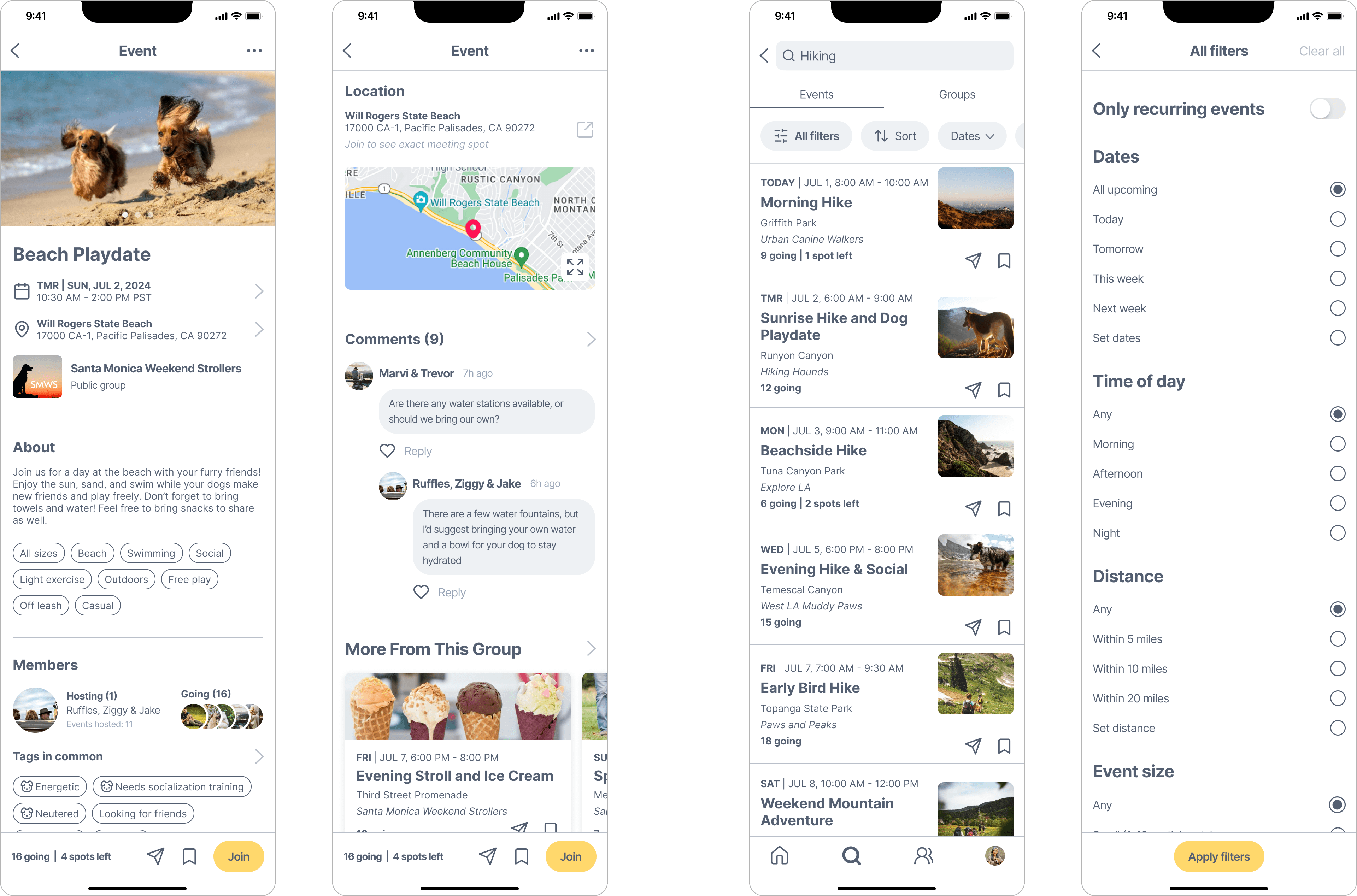
Additional screens: Event detail page and part of the search and filter flow.

Visual Style Guide

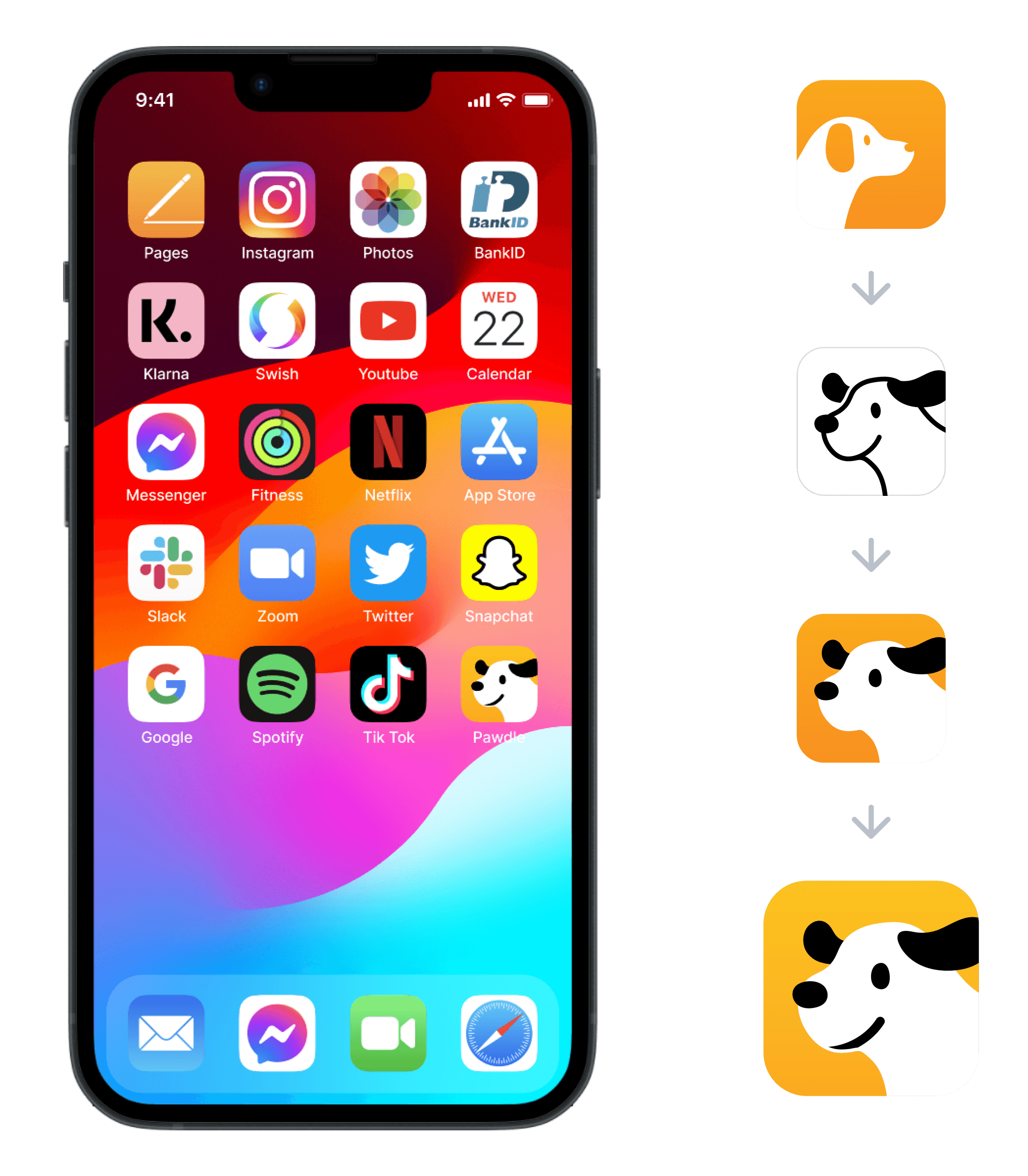
The visual direction focused on being clean, bright, playful, and approachable without feeling childish. The dog mascot became a strong emotional anchor, consistently resonating with users and strengthening the app’s identity. Studying iconography, typography, spacing, and color from existing apps helped the design feel intuitive, polished, and “real.”
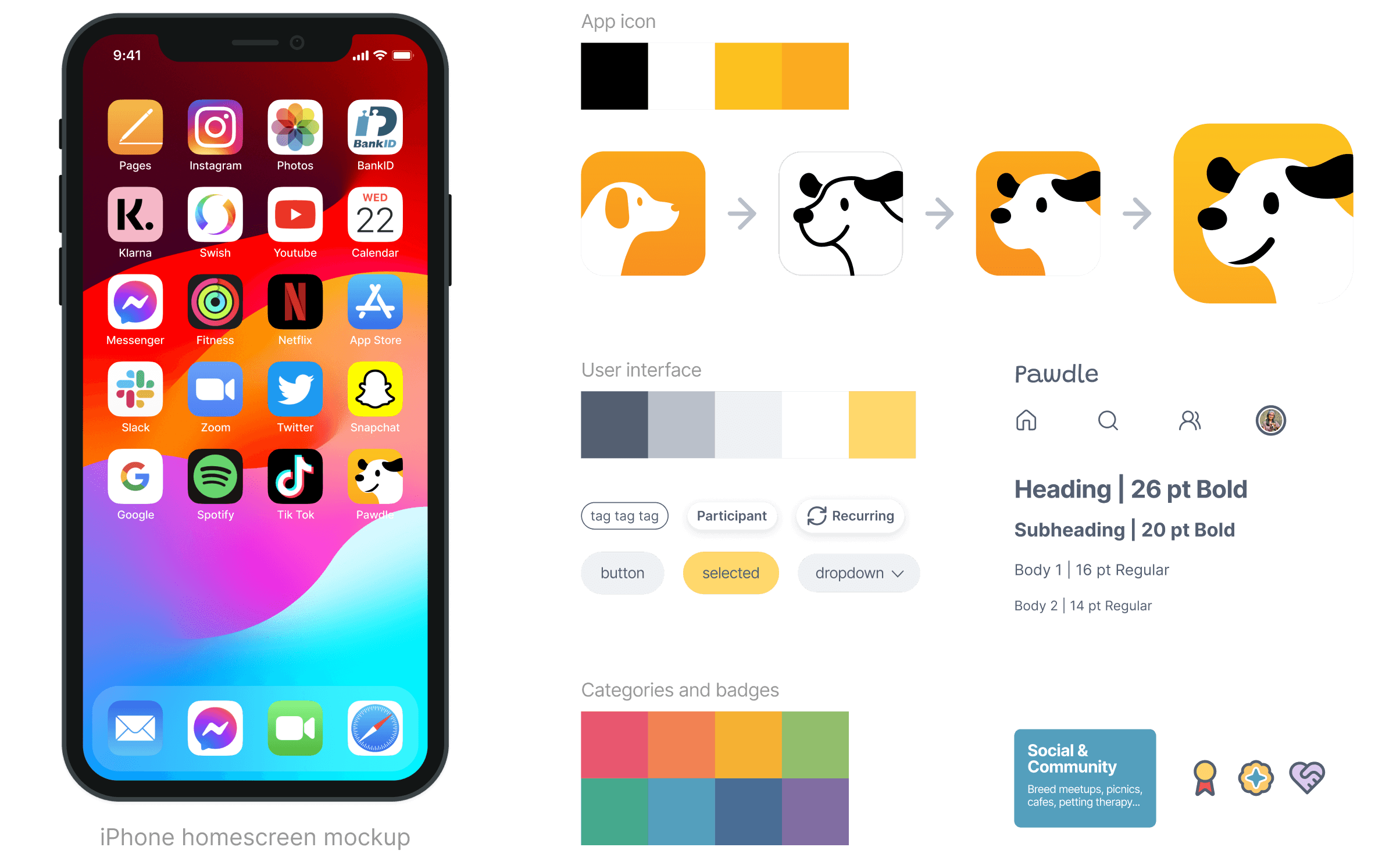
Overview of the app icon, color palette, buttons, and typography.

Final Product

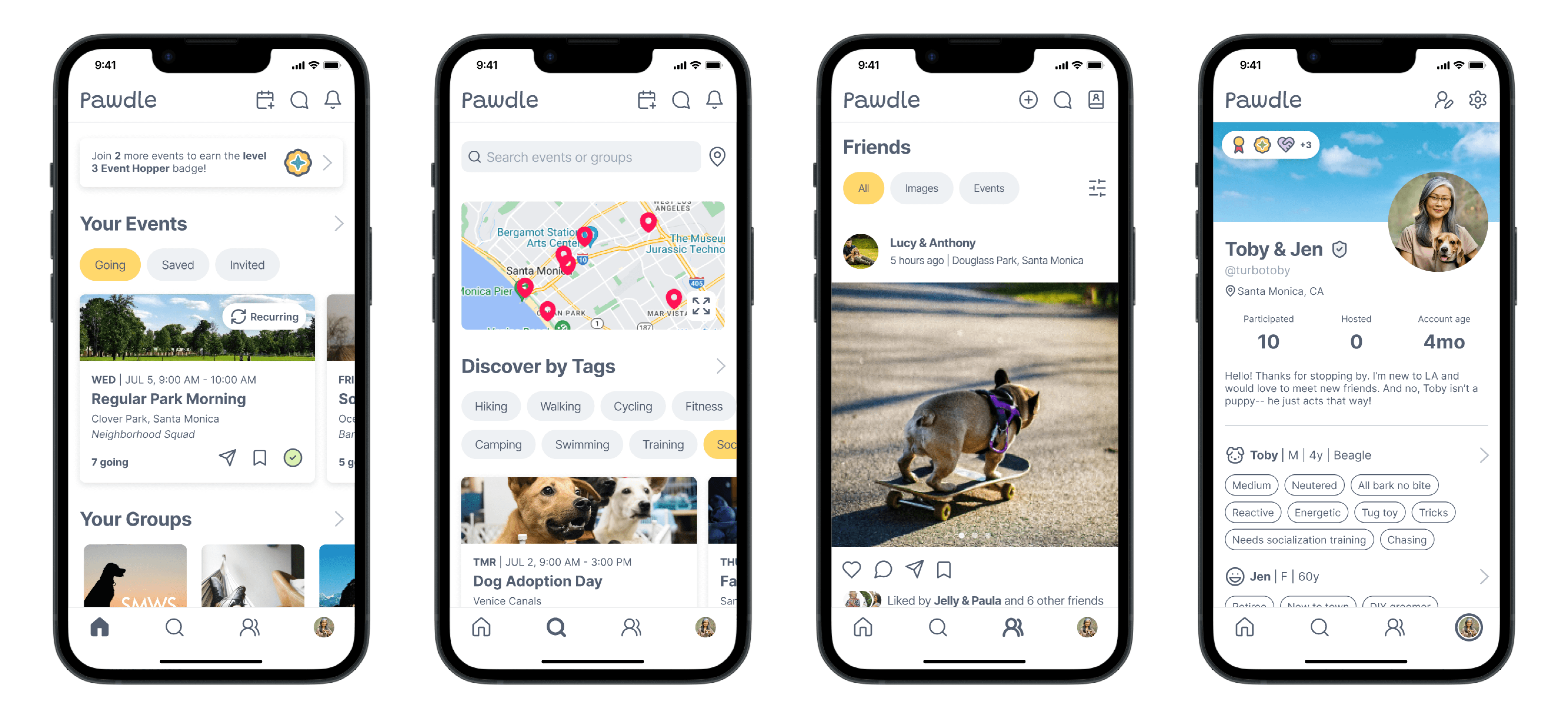
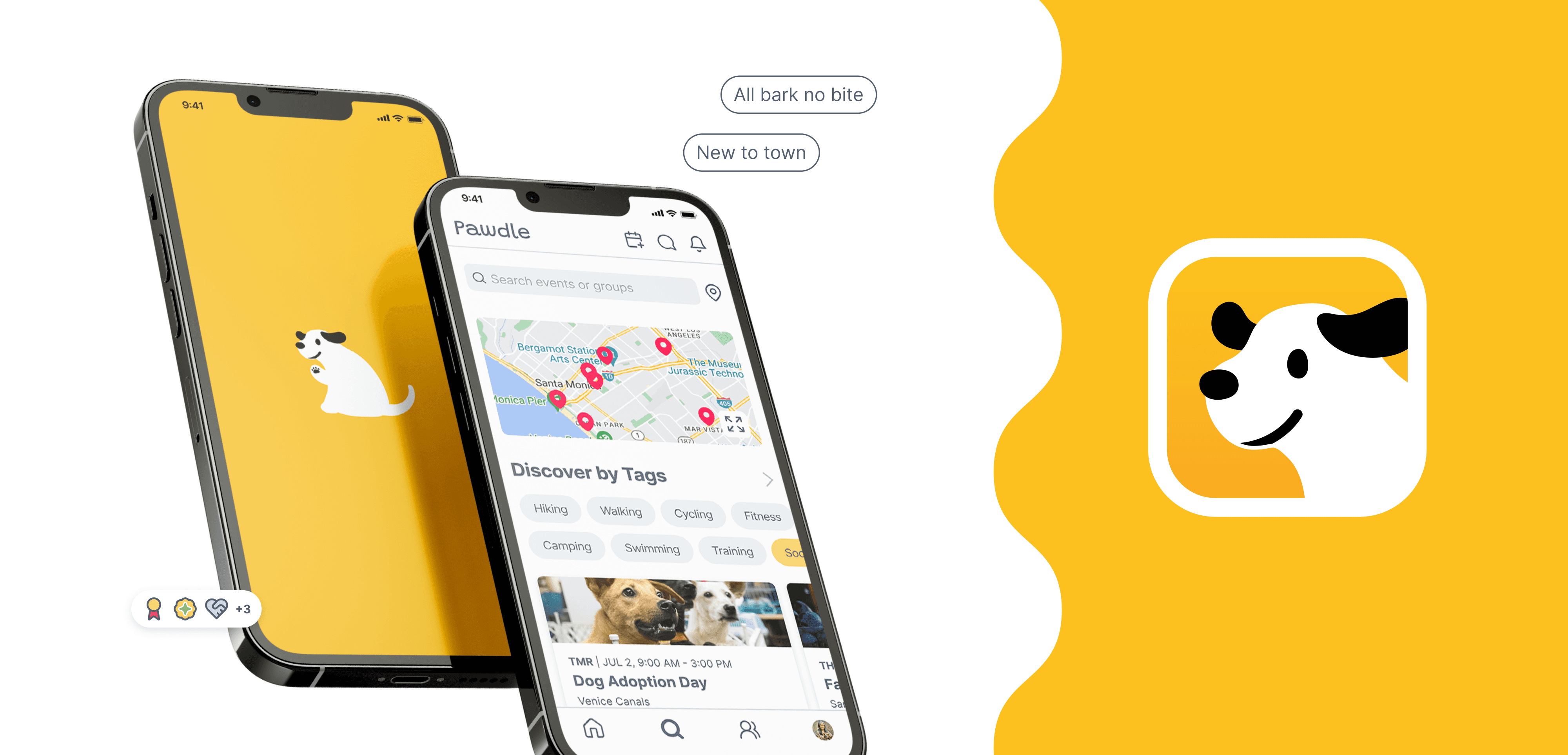
Pawdle is a mobile social platform that helps dog owners discover compatible activities, connect with trusted people, and build consistent routines that support training, exercise, and socialization. Unlike traditional event apps, Pawdle is designed specifically around dogs and their owners, using tailored recommendations, detailed tags, and filters that account for dog behavior, energy level, experience, and owner goals.
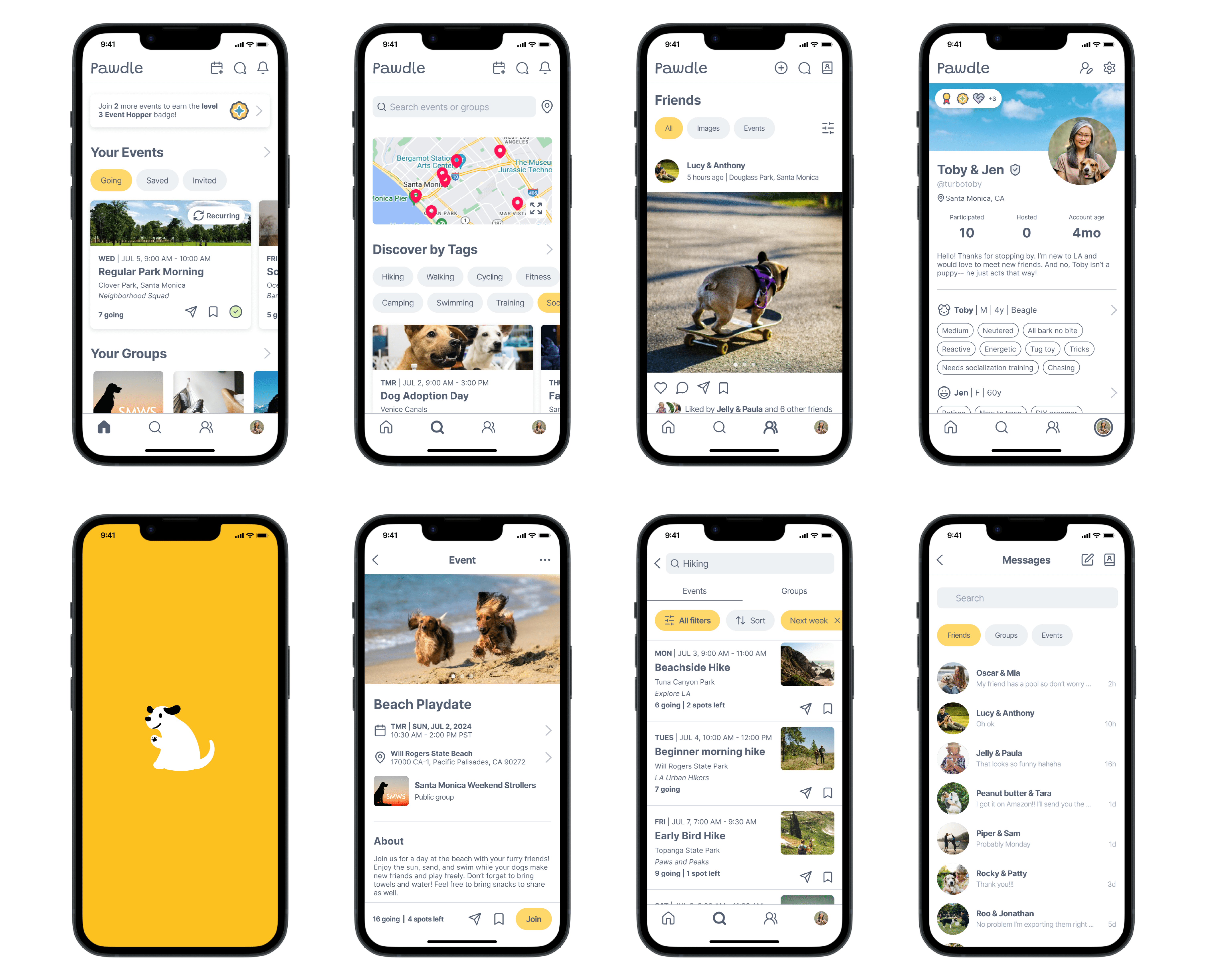
Select final screens.

Results & REflection

Results

Users valued the app concept, describing it as more relevant and thoughtful than general event platforms.

Users across age groups described Pawdle as thoughtful, detailed, charming, and something they would genuinely enjoy using. Feedback showed that the app filled a gap left by general event platforms by offering a more tailored, dog-centric experience. The project was selected by my professor as an example for future classes.


“It’s so detailed. You really considered everything! The tags are very relevant and helpful.”

60, Retiree, LA

Has a dog, new to LA

“It’s so detailed. You really considered everything! The tags are very relevant and helpful.”

60, Retiree, LA

Has a dog, new to LA

“It’s so detailed. You really considered everything! The tags are very relevant and helpful.”

60, Retiree, LA

Has a dog, new to LA

“I would totally use this! Why is it not a thing yet?”

21, Student, LA

Cares for family dog

“I would totally use this! Why is it not a thing yet?”

21, Student, LA

Cares for family dog

“I would totally use this! Why is it not a thing yet?”

21, Student, LA

Cares for family dog

“Soo cute, I love the dog, I love all of it! Can’t believe you made this.”

26, Professional, NYC

First-time dog owner

“Soo cute, I love the dog, I love all of it! Can’t believe you made this.”

26, Professional, NYC

First-time dog owner

“Soo cute, I love the dog, I love all of it! Can’t believe you made this.”

26, Professional, NYC

First-time dog owner

Reflection

Designing for a specific audience creates stronger alignment and clarity.

This project reinforced the value of focusing on a clearly defined audience rather than trying to serve everyone. Although the short class timeline limited formal usability testing, the structured research process and continuous informal feedback grounded decisions in real behaviors and goals. For my first time designing a mobile app, I also learned how critical design patterns and narrative clarity are in making complex systems understandable and credible.

Future Exploration

Evolve Pawdle into a validated, real-world product.

Conduct formal testing with a broader user base beyond my personal network.

Conduct formal testing with a broader user base beyond my personal network.

Expand trust and safety features through verification and moderation tools.

Expand trust and safety features through verification and moderation tools.

Experiment with labeling systems for better compatibility matching.

Experiment with labeling systems for better compatibility matching.

Explore development feasibility and a small-scale local launch.

Explore development feasibility and a small-scale local launch.